Russia Ukraine energy ceasefire: Russia hits 6 energy sites in a day, Zelenskyy says
By Shamyak
Published · Updated
Latest updates
- : Zelenskyy says Russia hit 6 energy facilities on 12 October; the Kremlin says only that contacts are ongoing; Kyiv offers to stop refinery strikes if Moscow stops
A day after Trump announced the truce, Kyiv says Russian strikes hit 6 energy facilities and the Kremlin will say only that contacts are ongoing. Our updated timeline, Kyiv's refinery offer and the diesel link.
Original report
On 12 October 2026, a day after US President Donald Trump announced a Russia-Ukraine "energy ceasefire", Ukraine's President Volodymyr Zelenskyy said Russia had attacked 6 Ukrainian energy facilities that day alone (Al Jazeera, 2026). Moscow has still not said whether it agreed: "Contacts are ongoing," Kremlin spokesman Dmitry Peskov said, NBC News reported (NBC News, 2026).
So the truce exists in Trump's post, not yet on the ground. Kyiv now offers a trade, its strikes on Russian oil refineries for Russia's strikes on Ukraine's grid, while Trump has blamed Ukrainian strikes for rising US diesel prices before the midterm elections (The Moscow Times, 2026; NBC News, 2026).
What we know
This is our dated timeline, updated with the reports published since 11 October. Exact times were not given in the reports we read.
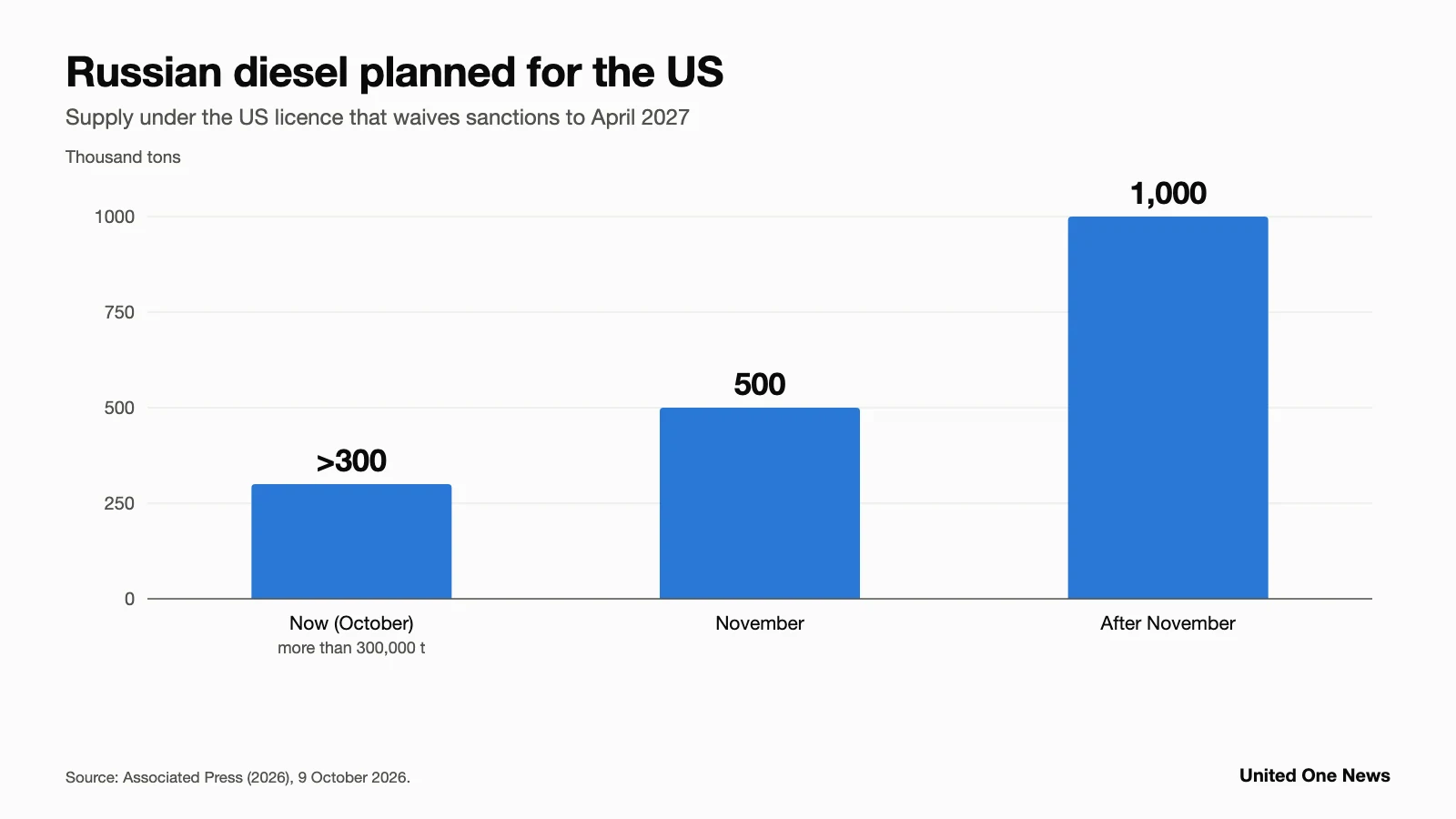
- 9 October: Trump said Vladimir Putin had agreed to supply more than 300,000 tons of Russian diesel at once, under a temporary US licence with sanctions waived to April 2027, the AP reported (Associated Press, 2026a). NBC News said the US lifted sanctions on Russian fuel that Friday (NBC News, 2026).
- 10 October: Trump said Zelenskyy had "better damn well stop" attacking Russian refineries and suggested Ukraine get a new leader who can make a deal, the Kyiv Independent reported (Kyiv Independent, 2026).
- 11 October: Trump posted the "energy ceasefire", effective immediately. Zelenskyy said it was news to him but good news in principle (PBS NewsHour, 2026a; Associated Press, 2026b).
- 11 October, evening: Russia hit the CHP-5 thermal power plant in Kharkiv (Euromaidan Press, 2026). Russian drones killed 3 people and injured 9 in the village of Pisochyn, PBS NewsHour reported (PBS NewsHour, 2026b).
- 11 October: Zelenskyy said Kyiv would stop hitting Russian refineries if Moscow stopped attacking Ukraine's energy system (The Moscow Times, 2026).
- Overnight into 12 October: Ukraine's air force said it shot down 89 of 121 Russian drones (PBS NewsHour, 2026b).
- 12 October: Russia struck power plants in Kharkiv and gas facilities in the Kharkiv region, and Zelenskyy put the day's total at 6 energy facilities (PBS NewsHour, 2026b; Al Jazeera, 2026).
The strikes on 12 October answer the first question readers are asking: has anything stopped?
Russia's strikes on the grid have not paused
By Kyiv's count, nothing changed after the announcement. Of the 121 drones Ukraine's air force counted overnight into 12 October, 32 were not shot down, about 1 in 4 (PBS NewsHour, 2026b). Zelenskyy said 6 energy facilities were hit on 12 October (Al Jazeera, 2026).
"We support it, but I have not heard approval from the Russian side," Zelenskyy said, PBS NewsHour reported (PBS NewsHour, 2026b).
The truce landed after a heavy week. Zelenskyy said Russia carried out more than 200 strikes on Ukraine's power grid in the week before it, 17 on gas and oil sites, and that more than 150 people were killed and 700 wounded, Euromaidan Press reported (Euromaidan Press, 2026).
Russia's silence is the other half of the picture.
The Kremlin has not signed up
Peskov did not say whether Russia accepted the energy truce, saying only that contacts were ongoing (NBC News, 2026). Al Jazeera reported that the Kremlin rejected a separate proposal for a 60-day truce, linked to elections, with Peskov saying Russia wants long-term peace rather than a ceasefire (Al Jazeera, 2026). We found that rejection in one outlet only.
No source we read reports Moscow accusing Ukraine of breaking the energy truce, or Moscow commenting on the 12 October strikes. That leaves Kyiv's offer as the only concrete term on the table.
Kyiv's offer: refineries for power plants
Zelenskyy said Ukraine would stop striking Russian refineries if Russia halted attacks on Ukraine's energy system. "If Russia does not agree... we will respond," he said, The Moscow Times reported (The Moscow Times, 2026).
The refinery strikes are Kyiv's leverage. Ukraine's Defence Ministry says they have disabled more than 51% of Russian refining capacity, the Kyiv Independent reported; that is a Ukrainian claim we found in one source only (Kyiv Independent, 2026). Those same strikes are what Trump wants stopped, and the reason is at the pump.
Why Washington wants it: diesel
For US readers, the link is fuel prices. US diesel averaged $6.28 a gallon, after a record $6.52 on 22 September, the AP reported on 9 October (Associated Press, 2026a). Trump blamed Ukrainian strikes for rising diesel prices before the midterms, NBC News and The Moscow Times reported (NBC News, 2026; The Moscow Times, 2026).
- Planned Russian diesel to the US: 300,000 tons now, 500,000 in November and 1 million after that, NBC News reported (NBC News, 2026).
- Peace talks continue in Miami with US envoys Steve Witkoff and Jared Kushner, the AP reported (Associated Press, 2026a).
- In Europe, the EU imposed almost 1,600 new sanctions on Russia's military-industrial complex, Al Jazeera reported; we found that figure in one source only (Al Jazeera, 2026).
For readers in India, what the diesel deal means for India's Russian oil purchases is in Trump Russia oil deal: US eases diesel sanctions while India's Russian crude falls.
How outlets framed it
- PBS NewsHour: Zelenskyy says Russia strikes energy sites despite Trump's claim.
- NBC News: Trump claims a ceasefire, Ukraine says attacks continue.
- Al Jazeera: Zelenskyy accuses Russia of violating the ceasefire.
- The Moscow Times: Ukraine will stop hitting refineries if Russia halts.
- Euromaidan Press: a Kharkiv plant hit hours after the truce.
See how every outlet covered it.
What we don't know yet
- The Kremlin's formal position on the energy ceasefire.
- Whether either side has paused strikes on energy sites since 12 October.
- What, if anything, was agreed in US-Russia contacts on the truce.
- The exact times of Trump's post and of the strikes that followed.
Questions people are asking
Is there a Russia-Ukraine energy ceasefire or not?
Not in practice. Trump announced it on 11 October, the Kremlin says only that contacts are ongoing, and Zelenskyy says Russia hit 6 energy facilities on 12 October (NBC News, 2026; Al Jazeera, 2026).
Who broke the energy ceasefire?
No independent finding exists yet. Zelenskyy accuses Russia, citing 6 energy facilities hit on 12 October and 121 drones overnight, 89 shot down; no source we read reports Moscow's response to the accusation (Al Jazeera, 2026; PBS NewsHour, 2026b).
What did the Kremlin say about the energy ceasefire?
Peskov said only that contacts are ongoing (NBC News, 2026). Al Jazeera reported the Kremlin rejected a separate 60-day truce proposal, with Peskov saying Russia wants long-term peace, not a ceasefire (Al Jazeera, 2026).
Will Ukraine stop hitting Russian refineries?
Yes, if Russia halts attacks on Ukraine's energy system, Zelenskyy said on 11 October; Kyiv claims its strikes have disabled more than 51% of Russian refining capacity (The Moscow Times, 2026; Kyiv Independent, 2026).
Why did Trump announce the energy ceasefire?
He has not given a reason in the reports we read. NBC News and The Moscow Times link it to US diesel prices, which averaged $6.28 a gallon in early October, before the midterms (NBC News, 2026; The Moscow Times, 2026; Associated Press, 2026a).
What happens next
EU foreign ministers met on sanctions on 12 October, with Ukraine's foreign minister attending, The Moscow Times reported (The Moscow Times, 2026). Russian diesel supplies to the US are due to rise to 500,000 tons in November (NBC News, 2026).
- Trump Russia oil deal: US eases diesel sanctions while India's Russian crude falls
- India's US-Russia balancing act in numbers: oil, tariffs, Pakistan, NGOs and China
References
- Al Jazeera (2026) Ukraine's Zelenskyy accuses Russia of violating Trump's 'energy ceasefire'. Al Jazeera. Available at: Ukraine's Zelenskyy accuses Russia of violating Trump's energy ceasefire (Accessed: 12 October 2026).
- Associated Press (2026a) Trump says US to get diesel from Russia, relaxing pressure on Moscow to ease prices before midterms. News4JAX. Available at: Trump says US to get diesel from Russia (Accessed: 12 October 2026).
- Associated Press (2026b) Trump says energy ceasefire agreed, but Kyiv says attacks continue. 1News. Available at: Trump says energy ceasefire agreed, but Kyiv says attacks continue (Accessed: 12 October 2026).
- Euromaidan Press (2026) Hours after Trump declared an energy ceasefire, Russia hit Kharkiv power plant. Euromaidan Press. Available at: Hours after Trump declared an energy ceasefire, Russia hit Kharkiv power plant (Accessed: 12 October 2026).
- Kyiv Independent (2026) 'He better damn well stop': Trump slams Zelensky for attacking Russian refineries. Kyiv Independent. Available at: Trump slams Zelensky for attacking Russian refineries (Accessed: 12 October 2026).
- NBC News (2026) Trump claims 'energy ceasefire,' but Ukraine says Russia keeps striking its energy facilities. NBC News. Available at: Trump claims energy ceasefire, but Ukraine says Russia keeps striking (Accessed: 12 October 2026).
- PBS NewsHour (2026a) Trump claims Russia and Ukraine agree to energy ceasefire despite continued attacks. PBS. Available at: Trump claims Russia and Ukraine agree to energy ceasefire despite continued attacks (Accessed: 12 October 2026).
- PBS NewsHour (2026b) Zelenskyy says Russia strikes energy facilities despite Trump claim of an energy ceasefire. PBS. Available at: Zelenskyy says Russia strikes energy facilities despite Trump claim (Accessed: 12 October 2026).
- The Moscow Times (2026) Ukraine will stop hitting refineries if Russia halts energy attacks, Zelensky says. The Moscow Times. Available at: Ukraine will stop hitting refineries if Russia halts energy attacks (Accessed: 12 October 2026).
How we did this
We updated our dated timeline with reports published on 11 and 12 October by PBS NewsHour, NBC News, Al Jazeera, The Moscow Times and the Kyiv Independent, alongside the earlier AP reports via News4JAX and 1News and Euromaidan Press. We placed each statement by the date the outlet gave, marked claims carried by one outlet only, did the drone arithmetic from the air force figures, and compared each outlet's headline angle. Questions readers raised online were checked against these reports; online posts are not used as sources.
This story was produced, reviewed, edited and verified by the reporter before publication, with AI assistance where required.
Covered by 38 outlets across the spectrum: 29% left, 45% center, 26% right.
Who is covering this story
- Left-leaning (6): The New Indian Express, NDTV, The Hindu, PBS NewsHour, NBC News, The Moscow Times (Reuters)
- Center (9): Economic Times, Mint, Business Today, Deccan Herald, Hindustan Times, Mid-Day, The Hindu BusinessLine, News4JAX (Associated Press), Al Jazeera
- Right-leaning (6): Times Now, Sunday Guardian, Deccan Chronicle, India TV English, Times of India, Kyiv Independent
- Not yet rated (2): Euromaidan Press, 1News (Associated Press)
Sources
- Ukraine Sets One Condition For Halting Russia Refinery Strikes, Pushes Back On Trump — Times Now (right-leaning) ·
- Russia Ukraine War Live News: Zelensky Proposes Mutual Halt on Energy Infrastructure Strikes Amid Escalating Conflict With Russia — Sunday Guardian (right-leaning) ·
- Kyiv pushes back on Trump's call for a new Ukrainian president as drones hit Russian data hub — The New Indian Express (left-leaning) ·
- Trump declares Russia-Ukraine ‘energy ceasefire’ — Economic Times (center) ·
- Trump announces ‘energy ceasefire’ between Russia and Ukraine, urges both sides not to break it — Mint (center) ·
- 'Do not break it': Trump announces immediate 'energy ceasefire' between Russia and Ukraine — Business Today (center) ·
- Trump Announces Russia-Ukraine Energy Ceasefire, Zelensky Says "News For Me" — NDTV (left-leaning) ·
- Ukraine's Zelenskyy unaware of 'energy ceasefire' announced by Trump: Report — Deccan Herald (center) ·
- ‘60 days of total ceasefire’: Zelensky places condition after Trump calls for Ukraine elections — Hindustan Times (center) ·
- Trump Announces Ceasefire, Putin Strikes Ukraine's Energy Lifeline Hours Later — Times Now (right-leaning) ·
- Trump Says Russia and Ukraine Reach Energy Ceasefire ‘Effective Immediately’ — Deccan Chronicle (right-leaning) ·
- Russia hits Ukraine power plants despite Trump energy ceasefire claim — The New Indian Express (left-leaning) ·
- Trump says Russia, Ukraine agree to ‘energy ceasefire’ but Kyiv says attacks continue — The Hindu (left-leaning) ·
- 'Ukraine wants peace. Does Russia?' Zelensky reports fresh strikes on power plants despite Trump's energy ceasefire announcement — Hindustan Times (center) ·
- Trump announces Russia-Ukraine energy ceasefire; Moscow yet to confirm — Mid-Day (center) ·
- Trump says Russia, Ukraine agree to 'energy ceasefire' but Kyiv says attacks continue — The Hindu BusinessLine (center) ·
- 'Energy ceasefire was news to me': Zelenskyy reacts to Trump's Russia-Ukraine announcement — India TV English (right-leaning) ·
- Russia-Ukraine war: Trump announces ‘energy ceasefire’, says both sides agree; here's how Kyiv and Moscow responded — Mint (center) ·
- Zelensky backs Trump's energy ceasefire, awaits details from US — Mid-Day (center) ·
- Zelensky Says "Will Respond" If Russia Does Not Follow 'Energy Ceasefire' — NDTV (left-leaning) ·
- Article from Euromaidan Press — Euromaidan Press (not yet rated) ·
- Trump says 'energy ceasefire' agreed, but Kyiv says attacks continue — 1News (Associated Press) (not yet rated) ·
- Trump strikes deal with Putin to get diesel in sharp reversal of US policy weeks before midterms — News4JAX (Associated Press) (center) ·
- Trump claims Russia and Ukraine agree to 'energy ceasefire' despite continued attacks — PBS NewsHour (left-leaning) ·
- Zelenskyy says Russia strikes Ukraine energy sites despite Trump’s ceasefire claim — Times of India (right-leaning) ·
- Zelenskyy urges U.S. to ensure Russia respects energy ceasefire — The Hindu (left-leaning) ·
- Russia offers one-day ceasefire if Kyiv holds elections, rejects 60-day truce bid — Times of India (right-leaning) ·
- Zelensky vows to respond as Moscow silent on 'energy ceasefire' — The New Indian Express (left-leaning) ·
- ‘Doesn't deserve respite': Russian FM on Zelensky's push for ceasefire to hold Ukraine elections — Hindustan Times (center) ·
- Trump claims ‘energy ceasefire,’ but Ukraine says Russia keeps striking its energy facilities — NBC News (left-leaning, AI-estimated) ·
- 'He better damn well stop' — Trump slams Zelensky for attacking Russian refineries, says Ukraine should get 'new president' — Kyiv Independent (right-leaning) ·
- Zelenskyy says Russia strikes energy facilities despite Trump claim of an energy ceasefire — PBS NewsHour (left-leaning) ·
- Ukraine’s Zelenskyy accuses Russia of violating Trump’s ‘energy ceasefire’ — Al Jazeera (center) ·
- Trump Says Russia and Ukraine Reached ‘Energy Ceasefire' - The Moscow Times — The Moscow Times (Reuters) (left-leaning) ·
- '10 Minutes After They Promised': Russia Strikes Ukraine as Trump's Energy Truce Unravels — Times Now (right-leaning) ·
- Trump Says Putin More Eager Than Zelenskyy to End Ukraine War — Deccan Chronicle (right-leaning) ·
- Trump says Putin ‘wants to make a deal more than Zelenskyy’ as Ukraine accuses Russia of violating energy ceasefire — Hindustan Times (center) ·
- Russia strikes Ukraine energy sites despite Trump's ceasefire claim — Mid-Day (center) ·