Today's editorials, 28 October 2026: SIR affidavit and Israel's vote
Published
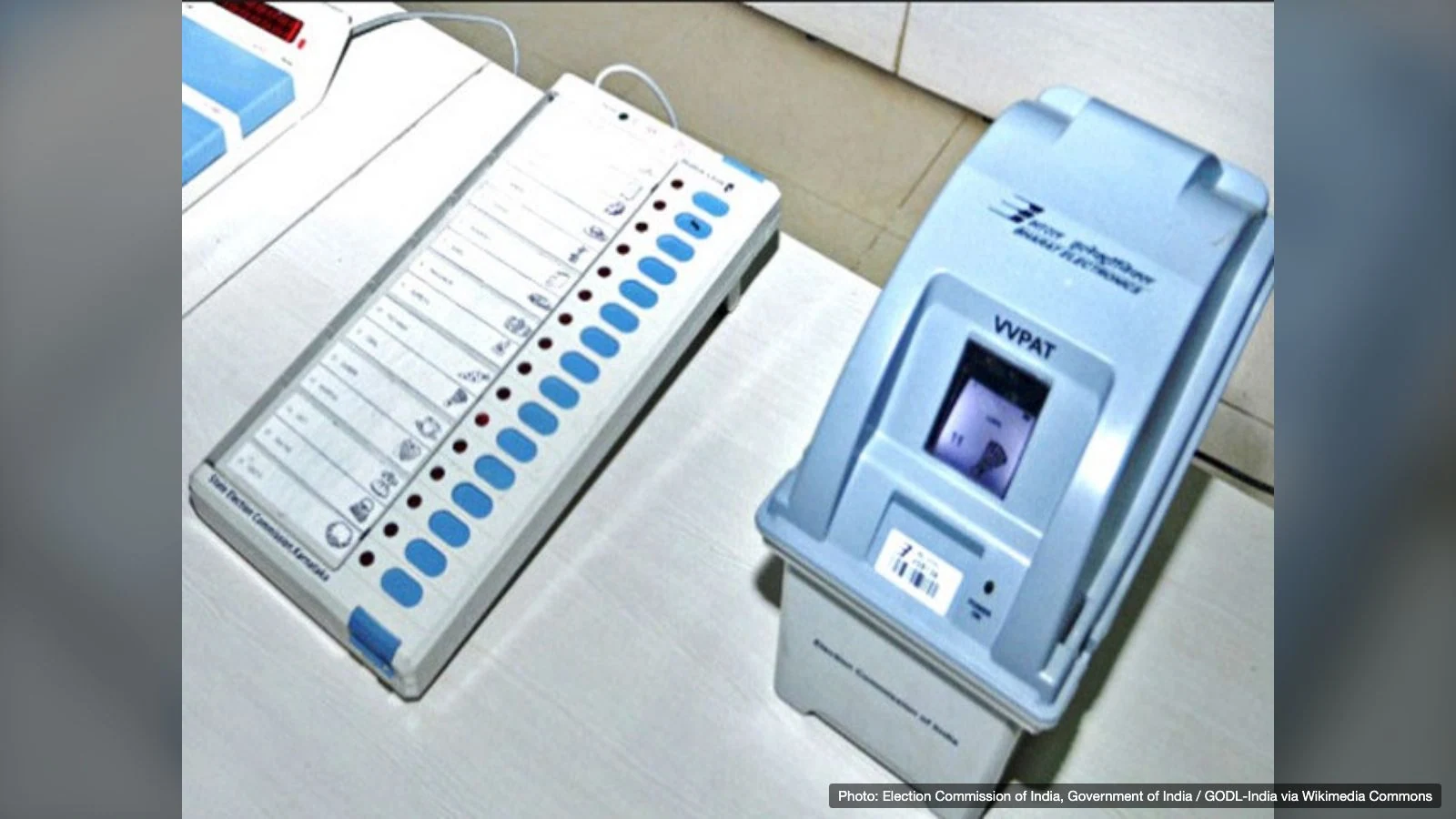
Hindustan Times and The Indian Express both say the ECI's Supreme Court affidavit on SIR leaves key questions unanswered, and two papers see Arab parties deciding Israel's next government. Eight editorials from seven papers, with key terms and practice questions.
Original report · Editorials
Today's editorials for 28 October 2026 lead on two questions of trust: how the Election Commission of India (ECI) ran the Special Intensive Revision (SIR) of voter rolls, and who will govern Israel after its election. Hindustan Times and The Indian Express both say the ECI's affidavit to the Supreme Court on SIR leaves key questions unanswered, though HT accepts its motive while the Express calls the affidavit "underwhelming". The Hindu and The New Indian Express both see Arab parties as possible kingmakers in Israel. Deccan Herald and The New Indian Express reject rigid local-job quotas in Karnataka, The Hindu BusinessLine argues against capping bond yields, and Deccan Chronicle wants tougher drink-driving penalties.
We read eight editorials from seven papers and summarise each below in our own words: the issue, the paper's argument and what it asks for. Our last edition, Today's editorials, 22 October 2026: SBI data breach and ethanol curbs, covered the SBI customer-data leak and the cost of turning food crops into fuel.
Hindustan Times: ECI must explain procedural lapses
Leaning: Centre · Read the editorial
Hindustan Times (2026) says the ECI's affidavit settles the question of motive but not of procedure.
- The issue: in its affidavit to the Supreme Court, the ECI says its three election commissioners took SIR decisions unanimously. HT accepts that this makes a believable case on motive.
- The argument: the affidavit does not say who ordered changes, whether the commissioners' objections were answered, why Form 6 appeared altered online, or who authorised 1.6 million appeals in West Bengal. HT says 2.71 million people in Bengal were disenfranchised because they ran out of time.
- What it asks for: the ECI should "aspire to a higher standard and set the record straight".
The Indian Express: ECI affidavit in the SIR case
Leaning: C-Left · Read the editorial
The Indian Express (2026) calls the same affidavit "underwhelming".
- The issue: the affidavit projects unanimity but blurs real differences, the paper says. Commissioners Vivek Joshi and Sukhbir Singh Sandhu raised 14 objections in 10 months, mostly about orders already issued. The paper also names the concern that SIR was run as the Chief Election Commissioner's one-man show.
- The argument: the ECI has rolled back its changes to Form 6 and set up an expert committee on ECINet, but it admits no mistake and fixes no accountability. Questions about Goa and West Bengal go unanswered.
- What it asks for: the Supreme Court should nudge the ECI towards a course correction through fuller transparency.
The Hindu: Clinging on: On Netanyahu and the Israel elections
Leaning: C-Left · Read the editorial
The Hindu (2026) says Israel's voters have taken away Netanyahu's majority but not yet his hold on power.
- The issue: with 85.6% of votes counted, Netanyahu's right-wing and religious bloc has lost its majority but is still the largest. The paper puts his Likud party at about 26 seats and its rival Yashar, led by Gadi Eisenkot, at about 21.
- The argument: Arab parties, the Joint List with 12 seats and Ra'am with 7, could decide who governs if the anti-Netanyahu bloc will work with them. The paper calls his wars in Gaza and Iran failures, and says his clinging on "would be bad news for Israel and the region".
- What it asks for: the Opposition should form a broad coalition, restore accountability and rethink Israel's reliance on military force.
- Background: our Iran war timeline: US, Israel and Iran from 28 February to 11 October, and India's stakes sets out the conflict the paper refers to.
The New Indian Express: New Israel government must face post-war reality in transformed region
Leaning: C-Left · Read the editorial
The New Indian Express (2026) looks past Netanyahu's fate to what any new government must do.
- The issue: with about 86% counted, the paper puts Netanyahu's bloc at 53 of 120 seats, the Jewish opposition at 48 and Arab parties at 19. The opposition could reach 67, a majority, but only with Arab support.
- The argument: Netanyahu has long survived by exploiting divisions among his opponents, and his political survival is now tied to his corruption trials. "The crucial question is no longer whether Netanyahu will politically survive," it says.
- What it asks for: the region is shifting, with Iranian, Saudi, Turkish and Pakistani officials meeting in Tehran, so any new government must give Israel a way out of the conflict.
Deccan Herald: Karnataka job quotas: Balancing local aspirations with merit
Leaning: Centre · Read the editorial
Deccan Herald (2026) takes the complaints of Kannadigas seriously, but not the case for rigid quotas.
- The issue: Chief Minister D K Shivakumar warned companies of action if they discriminate against Kannadigas, after claims of discrimination went viral. The paper says such claims deserve investigation.
- The argument: Karnataka's 2024 local-jobs Bill, which proposed reserving 50% of management and 70-75% of non-management jobs, was shelved after industry pushback. The Punjab and Haryana High Court struck down Haryana's 75% private-job quota law in 2023. The paper says "regional preference cannot become a substitute for merit".
- What it asks for: investigate complaints, make hiring transparent, set up a grievance mechanism and invest in skilling local people.
The New Indian Express: Local jobs issue clashes with IT industry churn
Leaning: C-Left · Read the editorial
The New Indian Express (2026) reads the quota push as politics at a bad moment for tech jobs.
- The issue: Shivakumar's warning followed a viral video. Karnataka holds about a quarter of India's tech output, more than 11,000 startups and 30% of global capability centres (GCCs), the paper says.
- The argument: the 2024 Bill proposed a 15-year domicile rule, Kannada fluency and fines of Rs 10,000-25,000, and industry threatened to relocate. Such a law "would spook entrepreneurs, raise the merit-versus-reservation bogey, and clash with Article 16".
- The timing: AI-driven layoffs and hiring freezes at big IT firms make it worse, and the paper reads the push as politics ahead of Rajyotsava on 1 November.
The Hindu BusinessLine: Bond blues
Leaning: Centre · Read the editorial
The Hindu BusinessLine (2026) argues that rising bond yields should be left alone for now.
- The issue: India's 10-year government bond (G-sec) yield is near 7.5%, a three-year high, with oil at $120 a barrel. The Centre still has Rs 7.86 lakh crore to borrow this financial year.
- The argument: high yields help keep foreign portfolio investors if global stock markets sell off, and 7.5% is close to the 2008-2026 median of 7.55%. The RBI and the government should "refrain from any market interventions to rein in the yield at this juncture," it says.
- What it asks for: press rating agencies to upgrade India's BBB rating; the paper puts India's debt at about 85% of GDP.
Deccan Chronicle: DC Edit | Unfit Drivers Worsen Road Safety
Leaning: C-Right · Read the editorial
Deccan Chronicle (2026) says reckless drivers of luxury cars keep escaping the consequences.
- The issue: underage, unlicensed or drunk drivers of luxury cars keep escaping accountability, the paper says. In a Kochi case, police officers were suspended and a judge whose minor son was driving was booked.
- The argument: India has about 1% of the world's vehicles but 11% of its road deaths. The paper calls 1.85 lakh deaths a year in a country of 140 crore people "an unacceptable number".
- What it asks for: tighter penalties for drink-driving and stronger enforcement.
Same topic, different sides
The ECI's SIR affidavit. Hindustan Times and The Indian Express both want the ECI to be more transparent, but they start from different places. HT credits the ECI's motive, lists the procedural questions left open, from Form 6 to 1.6 million appeals in West Bengal, and counts the cost in disenfranchised voters. The Express doubts the affidavit's picture of unanimity, points to 14 objections by two commissioners, and looks to the Supreme Court to push the ECI.
Israel's election. The Hindu and The New Indian Express both see Arab parties as possible kingmakers. The Hindu is sharply critical of Netanyahu and wants the Opposition to build a broad coalition. The New Indian Express is more analytic about how he has survived, and looks outward to regional diplomacy and a way out of the conflict. They present the count differently: The Hindu gives party seats at 85.6% counted (Likud 26, Yashar 21), while The New Indian Express gives bloc totals at about 86% (53, 48 and 19).
Karnataka's local jobs push. Both papers reject rigid domicile quotas. Deccan Herald accepts that discrimination claims need investigating and wants skilling and transparent hiring. The New Indian Express treats the push as politics that clashes with Article 16 and with job losses in IT.
For students
The key terms, background and questions below come from today's editorials. A term credited to a paper uses that paper's meaning; the rest are standard meanings.
Key terms
- Special Intensive Revision (SIR): the ECI's door-to-door re-verification of electoral rolls, now under challenge in the Supreme Court (Hindustan Times, 2026; The Indian Express, 2026).
- Form 6: the statutory form a new voter fills in to enrol, under the Registration of Electors Rules, 1960.
- Article 324: gives the Election Commission superintendence and control of elections.
- Article 16: equality of opportunity in public employment, cited against domicile quotas (The New Indian Express, 2026).
- 10-year G-sec yield: the benchmark return on Indian government bonds (The Hindu BusinessLine, 2026).
- Foreign portfolio investors (FPIs): overseas investors who buy or sell on that yield, which moves the rupee (The Hindu BusinessLine, 2026).
Background in three lines
- The ECI is re-verifying voter rolls door to door through SIR, and the exercise is under challenge in the Supreme Court. Our report on one challenge, Rahul Gandhi's Supreme Court SIR petition: 10 requests, from a pause to a deletion audit, sets out what the petitioners asked for.
- In its affidavit the ECI says its three commissioners decided SIR unanimously (Hindustan Times, 2026), while The Indian Express counts 14 objections by two of them in 10 months (The Indian Express, 2026).
- The ECI has rolled back changes to Form 6 and set up an expert committee on ECINet (The Indian Express, 2026), and HT puts the number disenfranchised in West Bengal for running out of time at 2.71 million (Hindustan Times, 2026).
Syllabus link: GS Paper II: Polity (the Election Commission and Article 324; Article 16 and domicile quotas) and International relations (West Asia). GS Paper III: Indian economy (government borrowing and bond yields).
Practice questions
- Mains (150 words): Hindustan Times and The Indian Express argued on 28 October 2026 that the ECI's affidavit on SIR explains its decisions but not its procedure. Examine how transparent procedure strengthens the Election Commission's authority under Article 324.
- Prelims: Consider these statements: (1) Form 6 is the form a new voter uses to enrol on the electoral roll. (2) Article 16 of the Constitution deals with equality of opportunity in public employment. (3) Article 324 gives the Election Commission superintendence and control of elections. Which are correct? (a) 1 and 2 only (b) 2 and 3 only (c) 1 and 3 only (d) 1, 2 and 3. Answer: (d).
- Today's editorials, 22 October 2026: SBI data breach and ethanol curbs
- Today's editorials, 21 October 2026: Manipur violence and Europe's unrest
- Today's editorials, 20 October 2026: Tiger Shroff firing and Russian oil
References
- Hindustan Times (2026) ECI must explain procedural lapses. Hindustan Times. Available at: ECI must explain procedural lapses (Accessed: 28 October 2026).
- The Indian Express (2026) ECI affidavit in the SIR case [editorial]. The Indian Express. Available at: ECI affidavit in the SIR case (Accessed: 28 October 2026).
- The Hindu (2026) Clinging on: On Netanyahu and the Israel elections. The Hindu. Available at: Clinging on: On Netanyahu and the Israel elections (Accessed: 28 October 2026).
- The New Indian Express (2026) New Israel government must face post-war reality in transformed region. The New Indian Express. Available at: New Israel government must face post-war reality in transformed region (Accessed: 28 October 2026).
- Deccan Herald (2026) Karnataka job quotas: Balancing local aspirations with merit. Deccan Herald. Available at: Karnataka job quotas: Balancing local aspirations with merit (Accessed: 28 October 2026).
- The New Indian Express (2026) Local jobs issue clashes with IT industry churn. The New Indian Express. Available at: Local jobs issue clashes with IT industry churn (Accessed: 28 October 2026).
- The Hindu BusinessLine (2026) Bond blues. The Hindu BusinessLine. Available at: Bond blues (Accessed: 28 October 2026).
- Deccan Chronicle (2026) DC Edit | Unfit Drivers Worsen Road Safety. Deccan Chronicle. Available at: DC Edit | Unfit Drivers Worsen Road Safety (Accessed: 28 October 2026).
How we did this
We read every unsigned editorial that went online in the 30 hours to 01:56 IST on 29 October 2026 at Hindustan Times, The Indian Express, The Hindu, The New Indian Express, Deccan Herald, The Hindu BusinessLine and Deccan Chronicle, and summarise eight of them here, each read in full. The two Israel editorials went online just after midnight IST on 29 October and fall inside that window. We also read three more pieces, The Tribune on journalists' confidential sources under the DPDP Act, The Hindu on river pollution in Rajasthan and Deccan Herald on childhood obesity, and left them out to keep the edition to eight. The Times of India, The Pioneer and The Statesman editorial pages did not open for us, and The Indian Express's 26 October editorial on Israel falls outside the window. Signed columns are left out. Every summary is in our own words, with at most one short quote per editorial, and each argument belongs to the paper that made it. Leanings are our panel's reviewed ratings from our outlet database, or Unknown where a paper has not been reviewed. We take no position on the issues.
This story was produced, reviewed, edited and verified by the reporter before publication, with AI assistance where required.
Covered by 8 outlets across the spectrum: 50% left, 38% center, 12% right.
Who is covering this story
- Left-leaning (3): Indian Express, The New Indian Express, The Hindu
- Center (3): Deccan Herald, Hindustan Times, The Hindu BusinessLine
- Right-leaning (1): Deccan Chronicle
Sources
- ECI affidavit to Court has unresolved questions, unbroken silences — Indian Express (left-leaning) ·
- DC Edit | Unfit Drivers Worsen Road Safety — Deccan Chronicle (right-leaning) ·
- Karnataka job quotas: Balancing local aspirations with merit — Deccan Herald (center) ·
- ECI must explain procedural lapses — Hindustan Times (center) ·
- Local jobs issue clashes with IT industry churn — The New Indian Express (left-leaning) ·
- New Israel government must face post-war reality in transformed region — The New Indian Express (left-leaning) ·
- Clinging on: On Netanyahu and the Israel elections — The Hindu (left-leaning) ·
- Bond market should be allowed to find its own level — The Hindu BusinessLine (center) ·