Burnham says Russia interfered in the Brexit vote, but gives no evidence
Published
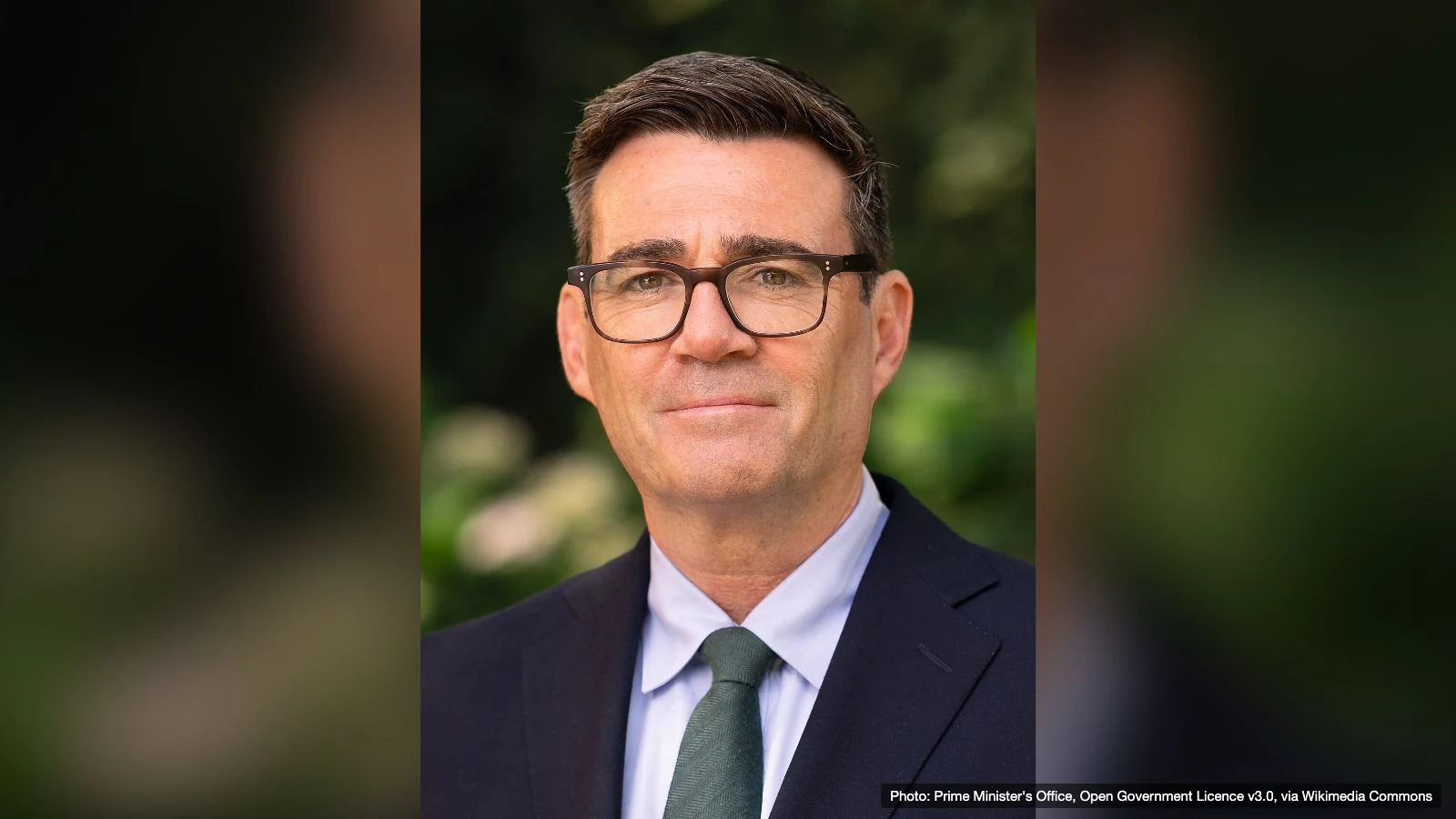
The prime minister says he was told "yes, there was" interference in the 2016 referendum. The 2020 government said it saw no evidence of success, and Farage has called him a liar.
Original report
UK Prime Minister Andy Burnham said in podcast excerpts released on 11 October 2026 that Russia interfered in the 2016 Brexit referendum: he had asked on arriving at Downing Street and got "the clear answer that yes, there was" (The Independent, 2026). He gave no evidence or details (Al Jazeera, 2026), and Downing Street declined to describe the briefing he received (The Independent, 2026; London Business News, 2026).
It is thought to be the first time a UK prime minister has confirmed Kremlin meddling in the vote (The Independent, 2026). It contrasts with the line of the government in 2020, which said it had "seen no evidence of successful interference" (Reuters, 2020). The stakes reach beyond the UK: Burnham said the claim should be "put clearly on the record" to help German and French voters see the threat (Al Jazeera, 2026).
What Burnham said about Russia and Brexit, and where
The remarks came on The Rest Is Politics podcast, hosted by Alastair Campbell and Rory Stewart, with excerpts released on Sunday 11 October (The Irish Times, 2026; PA Media, 2026). Burnham said he had discussed Russian disinformation and the AfD with Chancellor Merz in Berlin (Al Jazeera, 2026).
It was not his first claim of this kind. At the UN General Assembly in September 2026, he said the UK has evidence that Russia tried to interfere in the 2019 general election (The Independent, 2026). He has also floated rejoining the EU in a future Labour manifesto (The Independent, 2026). What he did not do was publish anything new, so the public record still rests on a report from 2020.
What the evidence shows so far
The Intelligence and Security Committee (ISC) published its Russia report on 21 July 2020, four years after the referendum of 23 June 2016 (Reuters, 2020; London Business News, 2026). Its main findings, as summarised by London Business News and Al Jazeera (London Business News, 2026; Al Jazeera, 2026):
- The government had never assessed Russian interference in the referendum.
- Open-source material showed pro-Brexit content from the Russian state outlets RT and Sputnik, and bot and troll accounts.
- The committee did not judge whether any of this changed the result.
The government replied the same day: "A retrospective assessment of the EU Referendum is not necessary" (Reuters, 2020). By Monday, Downing Street was choosing its words with care.
Downing Street's careful line
A Downing Street spokesman said it was "inconceivable" that Russia did not seek to use the referendum to its benefit, but that Burnham "absolutely accepts" the result and believes it legitimate (PA Media, 2026). Another spokesperson said only that "national security is the first duty of any government" (The Independent, 2026).
Foreign Office minister Stephen Doughty said Russia "certainly" attempted to interfere but "I don't think they've succeeded", and gave no specifics (PA Media, 2026). The Irish Times reported that Downing Street "spent much of Monday trying to walk his comments back", and that Burnham told the Commons that afternoon of his "respect" for the result (The Irish Times, 2026). No source we read quotes Burnham withdrawing the claim. His opponents were less careful.
How opponents, pro-EU groups and Russia responded
Reform UK leader Nigel Farage, asked by LBC at a press conference in Hythe, said: "The Prime Minister is a liar. Yes, a liar." He said Boris Johnson, as foreign secretary, was told there was no interference (LBC, 2026; PA Media, 2026).
The Conservatives accused Burnham of being "dangerous and divisive", according to the Guardian's live blog; a shadow minister called the referendum a "legitimate vote" and said the prime minister was seeking to "reopen debate" (The Guardian, 2026). The Tories also accused him of trying to "unpick" the result (The Irish Times, 2026).
Pro-EU groups European Movement UK and Best for Britain welcomed the confirmation (The Independent, 2026). Russia has repeatedly denied meddling and dismisses British claims as "anti-Russian hysteria", Al Jazeera noted (Al Jazeera, 2026). We found no Kremlin reply to Burnham himself.
How the coverage split
- Al Jazeera, carrying AP and Reuters, led with Burnham saying interference was "clear" and noted he gave no evidence (Al Jazeera, 2026).
- The Independent led with Burnham as the first prime minister to confirm it, and with talk of the EU (The Independent, 2026).
- London Business News said he stopped short of the ISC's findings (London Business News, 2026).
- The Irish Times led with Downing Street trying to play the comments down (The Irish Times, 2026).
- LBC and PA led with Farage calling him a liar (LBC, 2026; PA Media, 2026).
What happens next
We found no dated government action: no new inquiry, no publication of the evidence and no timetable. What the briefing rested on remains unknown.
Questions people are asking
What evidence is there that Russia interfered in Brexit?
Burnham has published none, and Downing Street declined to describe his briefing (Al Jazeera, 2026; The Irish Times, 2026). The 2020 ISC report found pro-Brexit Russian state media content and troll activity but did not assess its impact (London Business News, 2026).
Why did no previous prime minister say it?
In July 2020 the government said it had "seen no evidence of successful interference" and that a look back at the referendum was "not necessary"; the ISC said interference had never been assessed (Reuters, 2020; London Business News, 2026).
Does it change the referendum result?
No. Downing Street says Burnham "absolutely accepts" the result and believes it legitimate, and a Foreign Office minister said Russia tried but did not succeed (PA Media, 2026).
Will there be an inquiry?
Not yet known. No source we read reports plans for an inquiry or any other dated government action.
What did Nigel Farage say about Burnham?
"The Prime Minister is a liar," Farage told LBC on 12 October, adding that Boris Johnson was told there was no interference (LBC, 2026; PA Media, 2026).
References
- Al Jazeera (2026) UK PM Andy Burnham says it is 'clear' Russia interfered in 2016 Brexit vote. Al Jazeera, with AP and Reuters, 12 October. Available at: UK PM Andy Burnham says it is 'clear' Russia interfered in 2016 Brexit vote (Accessed: 12 October 2026).
- LBC (2026) Nigel Farage blasts Andy Burnham as 'liar' after PM said Kremlin meddled in Brexit vote. LBC, 12 October. Available at: Nigel Farage blasts Andy Burnham as 'liar' after PM said Kremlin meddled in Brexit vote (Accessed: 12 October 2026).
- London Business News (2026) Burnham claims Russia 'clearly' interfered in Brexit referendum as he reignites EU debate. London Business News, 11 October. Available at: Burnham claims Russia 'clearly' interfered in Brexit referendum as he reignites EU debate (Accessed: 12 October 2026).
- PA Media (2026) Nigel Farage brands Andy Burnham 'a liar' over Russian interference in Brexit claims. Yahoo News UK, 12 October. Available at: Nigel Farage brands Andy Burnham 'a liar' over Russian interference in Brexit claims (Accessed: 12 October 2026).
- Reuters (2020) UK government says no evidence of successful Russian meddling in Brexit vote. Yahoo News, 21 July. Available at: UK government says no evidence of successful Russian meddling in Brexit vote (Accessed: 12 October 2026).
- The Guardian (2026) UK politics live: Tories accuse Burnham of being 'dangerous and divisive' after he confirms Russian interference in Brexit campaign. syndicated by IntelliNews, 12 October. Available at: UK politics live: Tories accuse Burnham of being 'dangerous and divisive' after he confirms Russian interference in Brexit campaign (Accessed: 12 October 2026).
- The Independent (2026) Burnham becomes first PM to confirm Russian interference in Brexit vote. Yahoo News UK, 12 October. Available at: Burnham becomes first PM to confirm Russian interference in Brexit vote (Accessed: 12 October 2026).
- The Irish Times (2026) Downing Street trying to play down Andy Burnham comments on Russia's role in Brexit. The Irish Times, 12 October. Available at: Downing Street trying to play down Andy Burnham comments on Russia's role in Brexit (Accessed: 12 October 2026).
How we did this
We compared how Al Jazeera, The Independent, London Business News, The Irish Times, PA Media, LBC and the Guardian's live blog reported Burnham's remarks and the replies on 11 and 12 October 2026. We set them against the 2020 record, using Reuters' report of the government's response to the ISC. We have not heard the full podcast. Reader questions came from public discussion on Reddit and X; every answer comes from the sources listed above.
This story was produced, reviewed, edited and verified by the reporter before publication, with AI assistance where required.
Covered by 8 outlets across the spectrum: 25% left, 75% center, 0% right.
Who is covering this story
- Left-leaning (2): IntelliNews (syndicating The Guardian), The Irish Times
- Center (5): London Business News, Yahoo News Singapore (Reuters), Yahoo! UK News, Al Jazeera, LBC
Sources
- UK politics live: Tories accuse Burnham of being ‘dangerous and divisive’ after he confirms Russian interference in Brexit campaign - IntelliNews — IntelliNews (syndicating The Guardian) (left-leaning) ·
- Burnham claims Russia ‘clearly’ interfered in Brexit referendum as he reignites EU debate - London Business News | Londonlovesbusiness.com — London Business News (center) ·
- UK government says no evidence of successful Russian meddling in Brexit vote — Yahoo News Singapore (Reuters) (center) ·
- Burnham becomes first PM to confirm Russian interference in Brexit vote — Yahoo! UK News (center, AI-estimated) ·
- Nigel Farage brands Andy Burnham 'a liar' over Russian interference in Brexit claims — Yahoo! UK News (center, AI-estimated) ·
- UK PM Andy Burnham says it is ‘clear’ Russia interfered in 2016 Brexit vote — Al Jazeera (center) ·
- Downing Street trying to play down Andy Burnham comments on Russia’s role in Brexit — The Irish Times (left-leaning) ·
- Nigel Farage blasts Andy Burnham as — LBC (center) ·