Kochi synagogue arson: what police say about the Kadavumbhagam fire, and what is unproven
Published · Updated
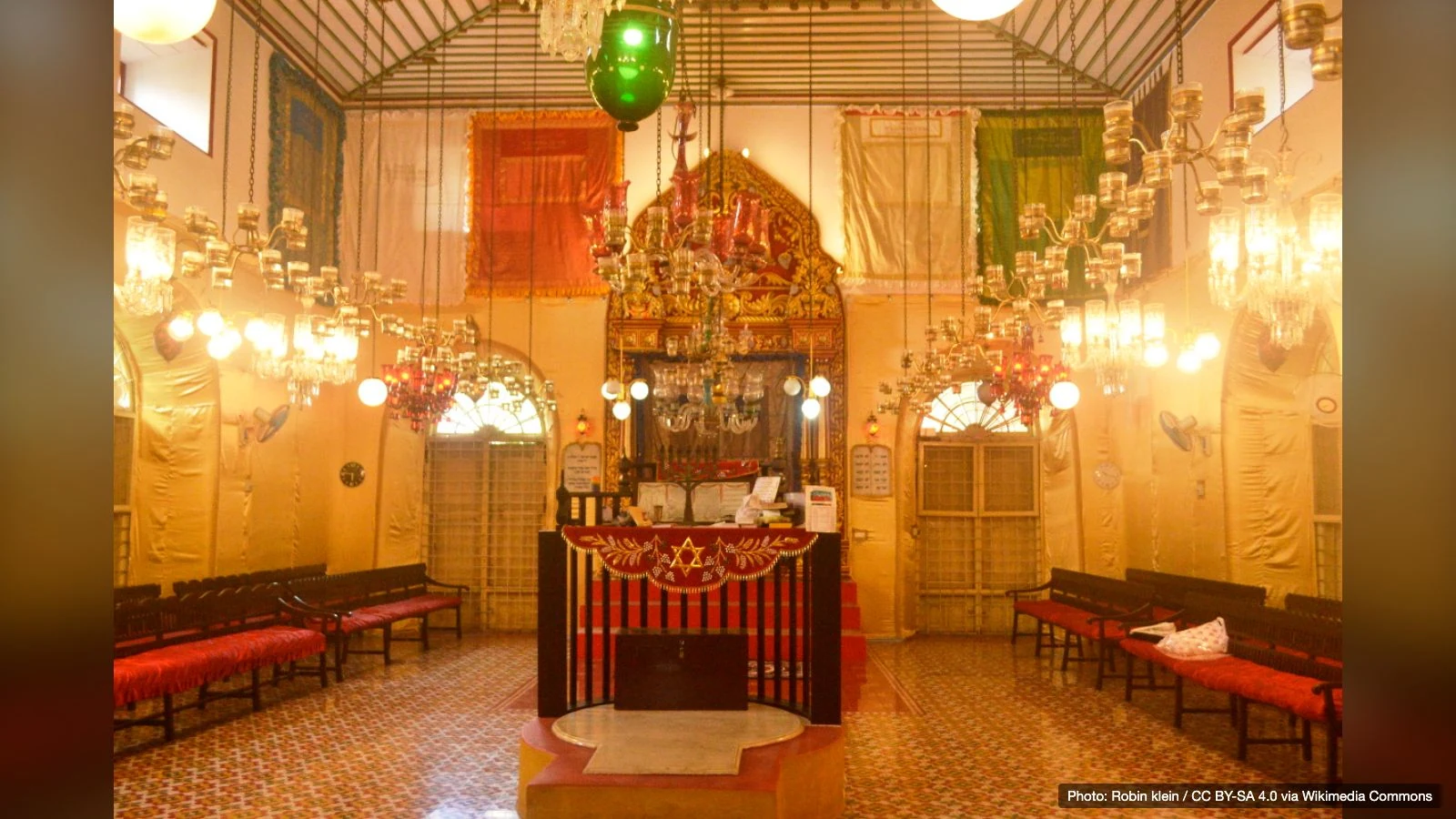
A fire was set outside a synagogue dated to 1200 CE on 12 October. The accused is in SIT custody for five days; police say suspected terror links are not yet established.
Original report
What happened in the Kadavumbhagam synagogue fire in Ernakulam? At about 2.30 am on Monday 12 October 2026, a fire was set at Blossom Nursery, a plant nursery in front of the Kadavumbhagam Synagogue at Ernakulam Market in Kochi, and police say boards outside the gate were burned (Hindustan Times, 2026; The Hindu, 2026). On 15 October a magistrate court sent the man police arrested, Ebin Paul, 32, of Puthencruz, to five days' custody with a Special Investigation Team (The Hindu, 2026).
Police are examining suspected extremist and foreign links. They have also said those links are not yet conclusively established (Hindustan Times, 2026). He has not been convicted of any offence, and none of the reports we read says which legal sections have been invoked.
A synagogue dated to 1200 CE
The building outside which the fire was set is one of Kerala's oldest Jewish sites. The Kadavumbhagam Synagogue was established in 1200 CE and has been restored several times on the same site, according to its Wikipedia entry (Wikipedia, 2026).
The same entry describes it as the oldest Malabar Jewish synagogue today, with a Torah scroll used for occasional services (Wikipedia, 2026). The nursery stands in front of it, within Kochi Central police limits (Times of India, 2026).
Police have given a detailed account of how the fire was set.
What police say happened that night
Police say the accused arrived in a blue Maruti Suzuki Ignis, poured petrol and set it alight, and that he recorded it on his phone, Hindustan Times and the Times of India reported (Hindustan Times, 2026; Times of India, 2026).
Police arrested him within hours (Hindustan Times, 2026). Hindustan Times and The Hindu name him as Ebin Paul; the Times of India names him as Eldho Paul (Hindustan Times, 2026; The Hindu, 2026; Times of India, 2026).
What police found on his phone is what turned a local arson case into a wider inquiry.
What police say they found, and what they say is unproven
Police set out several lines of inquiry. Each is their account, not an established finding.
- Messages: a preliminary examination of his phone showed communications with people suspected of foreign links and with online groups, and messages about Jewish places of worship and attacks in other Indian cities, police said (Hindustan Times, 2026).
- Not established: police said the suspected international and terror links are not yet conclusively established (Hindustan Times, 2026).
- "Boss": police are examining whether he acted on instructions from a person he called "Boss", and whether payments, possibly in cryptocurrency, were involved (Hindustan Times, 2026; Times of India, 2026).
- An earlier case: police say videos on his phone are suspected to link him to an earlier arson in Muvattupuzha, that he admitted involvement in that case during questioning, and that his role is being examined (Hindustan Times, 2026).
- Narcotics: narcotics-related communications were found on his devices and suspected narcotic substances were seized from his rented house; that part has been passed to Ernakulam Rural Police (Times of India, 2026).
Those lines are now with a dedicated team, under conditions set by a court.
Who is investigating, and on what terms
A Special Investigation Team was formed under Kochi City police. DCP Arun K Pavithran supervises it and assistant commissioner Sibi Tom leads it, the Times of India reported (Times of India, 2026).
On 15 October the Ernakulam Judicial First Class Magistrate Court-II sent him to SIT custody for five days, The Hindu reported. The court directed proper medical care, and a status report on his medical condition and the need for custody every 48 hours if remand is extended (The Hindu, 2026).
His phones and laptop have gone to the State Forensic Science Laboratory. The SIT is prioritising digital evidence to establish whether a wider network or anyone directing him exists, and central agencies are also investigating (The Hindu, 2026).
Much of what readers most want to know has not been made public.
What is not known yet
- Charges: the reports we read do not say which sections have been invoked, including whether any terror law applies.
- "Boss" and any foreign link: neither has been identified or established, police say (Hindustan Times, 2026).
- Central agencies: they are investigating, but no report we read says whether any agency, such as the National Investigation Agency, has taken over the case (The Hindu, 2026).
Questions people are asking
Who has been arrested?
Police arrested Ebin Paul, 32, of Puthencruz, who is in SIT custody for five days from 15 October (The Hindu, 2026).
Is it a terror attack?
Police are probing suspected extremist links but say suspected international and terror links are not yet conclusively established (Hindustan Times, 2026).
How old is the Kadavumbhagam Synagogue?
It dates to 1200 CE and has been restored several times on the same site (Wikipedia, 2026).
What happens next
Counted from 15 October, the five-day SIT custody would run until about 20 October unless the court extends it (The Hindu, 2026).
References
- Hindustan Times (2026) Suspected terror links under probe after arson near Kochi synagogue, accused held within hours. Hindustan Times. Available at: Suspected terror links under probe after arson near Kochi synagogue, accused held within hours (Accessed: 15 October 2026).
- The Hindu (2026) Arson outside synagogue in Kochi: SIT gets five-day custody of accused. The Hindu. Available at: Arson outside synagogue in Kochi: SIT gets five-day custody of accused (Accessed: 15 October 2026).
- Times News Network (2026) SIT to probe suspected extremist links of synagogue arson accused in Kochi. Times of India. Available at: SIT to probe suspected extremist links of synagogue arson accused in Kochi (Accessed: 15 October 2026).
- Wikipedia contributors (2026) Kadavumbhagam Ernakulam Synagogue. Wikipedia. Available at: Kadavumbhagam Ernakulam Synagogue (Accessed: 15 October 2026).
How we did this
We compared four reports on the case published after the 12 October fire, from Hindustan Times, the Times of India, The Hindu and The Indian Express. Each carried part of the record: the police account of the phone evidence, the SIT's leadership, or the court's custody terms. None explained the site's history. We put those parts into one account, added the synagogue's history from its Wikipedia entry, separated what police say from what is established, and noted that outlets spell the accused's name differently. We did not see the court order or speak to police.
This story was produced, reviewed, edited and verified by the reporter before publication, with AI assistance where required.
Covered by 14 outlets across the spectrum: 57% left, 14% center, 29% right.
Who is covering this story
- Left-leaning (3): The New Indian Express, Indian Express, The Hindu
- Center (2): Wikipedia, Hindustan Times
- Right-leaning (4): Times Now, India Today, Times of India, Deccan Chronicle
Sources
- Kochi synagogue fire: Man held within hours; police probe suspected international links — The New Indian Express (left-leaning) ·
- Keralam Synagogue Fire: Terror Plot Suspected, Suspect Arrested — Times Now (right-leaning) ·
- Kochi Synagogue Arson Bid Foiled, Accused Arrested as Police Probe Terror Angle — India Today (right-leaning) ·
- Police probe ‘extremist links’ after arson at ancient Kerala synagogue — Indian Express (left-leaning) ·
- Koder House fire under fresh scrutiny amid probe into synagogue arson — The Hindu (left-leaning) ·
- Kochi synagogue arson case: What happened, and history of over 800-year-old structure — The Hindu (left-leaning) ·
- Kadavumbhagam Ernakulam Synagogue - Wikipedia — Wikipedia (center) ·
- SIT to probe suspected extremist links of synagogue arson accused in Kochi — Times of India (right-leaning) ·
- Suspected terror links under probe after arson near Kochi synagogue, accused held within hours — Hindustan Times (center) ·
- Arson outside synagogue in Kochi: SIT gets five-day custody of accused — The Hindu (left-leaning) ·
- Kochi synagogue arson: Hunt for ‘Boss’ on, accused sent to 5-day police custody — The New Indian Express (left-leaning) ·
- Police Examine Electronic Devices of Accused in Arson Near Kochi Synagogue — Deccan Chronicle (right-leaning) ·
- Police take Kochi synagogue arson accused for evidence collection — The New Indian Express (left-leaning) ·
- Kochi synagogue arson accused linked to two earlier fire incidents: Police — The Hindu (left-leaning) ·