Air India Frankfurt hijack code 7500: pilot or ATC radar, three accounts of who sent it
Published
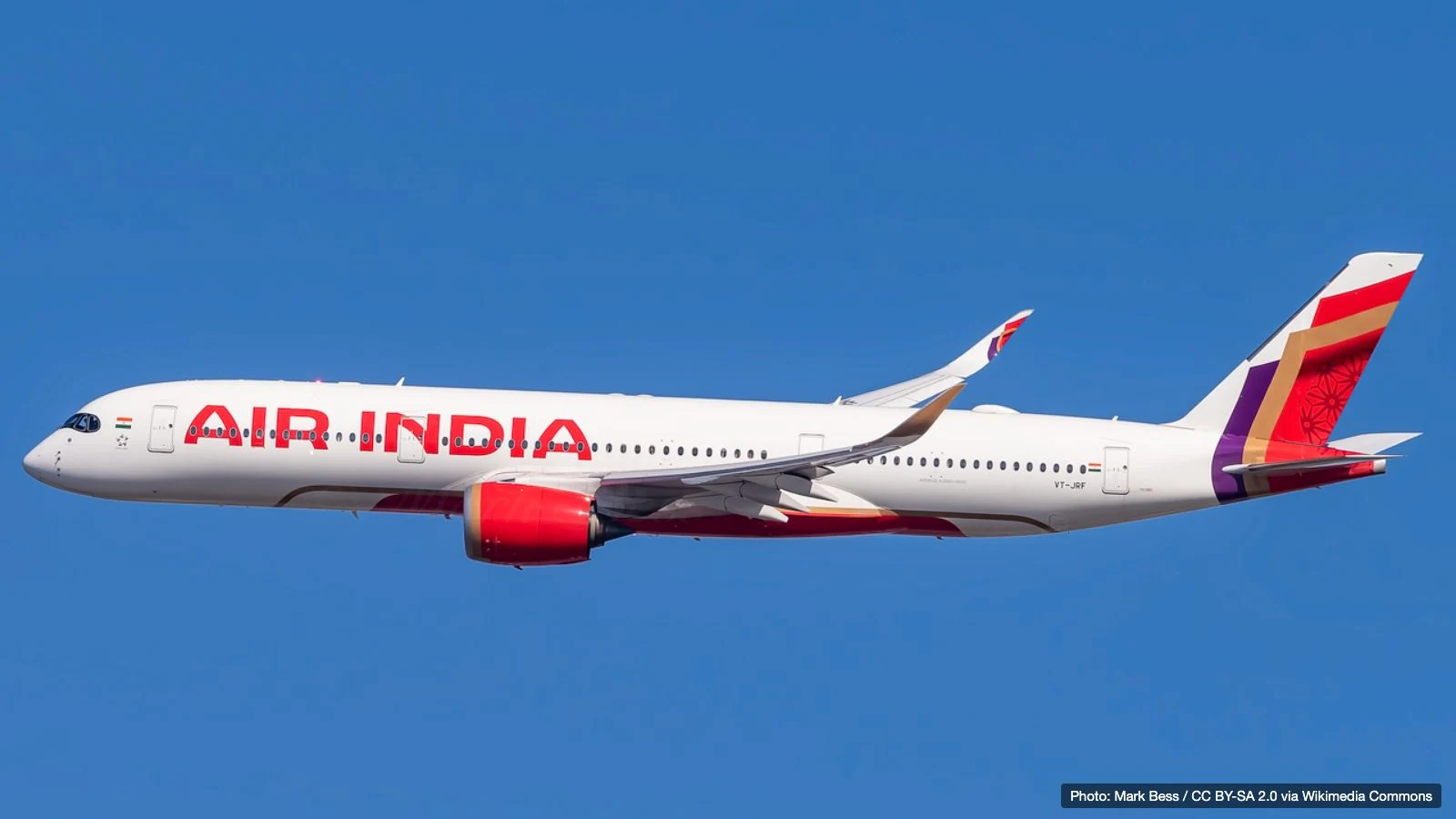
Flight AI2030 was diverted to Jaipur on 14 October and security found nothing. Reports disagree on whether the pilots or Mumbai's new radar sent the code, and the DGCA probe has to decide.
Original report
Who sent squawk 7500, the hijack code, from Air India's Frankfurt-Delhi flight on 14 October 2026: the pilots or an air traffic control system? Nobody has said for certain, and three major reports give three different accounts, while the DGCA investigates (The Hindu, 2026; India Today, 2026; Times of India, 2026).
What is not in dispute: flight AI2030 was diverted to Jaipur after the alert, landed at 9:35 am and was moved to an isolation bay (The Hindu, 2026; India Today, 2026). Security checks found nothing suspicious, and passengers flew on to Delhi on the same aircraft with the same crew, the Times of India and The Hindu reported (Times of India, 2026; The Hindu, 2026).
So this was not a hijack. The open question is why a hijack code appeared at all, and that is what the DGCA's probe has to settle.
What squawk 7500 means
Squawk 7500 is the transponder code for unlawful interference, or hijack, The Hindu and India Today reported (The Hindu, 2026; India Today, 2026).
On AI2030, the code triggered the protocol even though the crew reported nothing wrong. According to sources quoted by the Times of India, Mumbai ATC spoke to the pilots, who said operations were normal, but protocol still required a diversion (Times of India, 2026).
The aircraft was an ex-Vistara Boeing 787-9, registration VT-TSE (The Hindu, 2026). Exactly where the code came from is where the reports split.
Three accounts of who sent the code
The reports we compared disagree on the single most important point:
- India Today: the pilot reportedly activated the code, and Ahmedabad ATC received it for a few seconds around 9 am (India Today, 2026).
- The Hindu: Ahmedabad ATC picked it up while the flight was over the Mumbai flight information region, and airline sources disputed that the pilots entered it (The Hindu, 2026).
- Times of India: the pilots did not squawk 7500; Mumbai's new ATC radar somehow conveyed it (Times of India, 2026).
None of these accounts is official. Neither Air India nor the DGCA has said, in the reports we read, which is right.
The sequence of the morning, though, can be pieced together.
The morning of 14 October, minute by minute
Times come from India Today and The Hindu (India Today, 2026; The Hindu, 2026):
- About 9:00 am: Ahmedabad ATC receives the 7500 code for a few seconds, India Today reported.
- About 9:10 am: the Delhi airport war room decides to divert the flight, India Today reported.
- 9:35 am: AI2030 lands in Jaipur and goes to an isolation bay.
- Over 5 hours later: passengers re-board after the checks, the Times of India said (Times of India, 2026).
That puts about 35 minutes between the signal and the landing, by our arithmetic on India Today's times. Why an Ahmedabad or Mumbai controller was handling a Frankfurt flight at all has a simpler answer.
Why Mumbai ATC was in the picture
The flight was on a longer route because Pakistani airspace remains closed to Indian aircraft, the Times of India reported (Times of India, 2026). That routing brought it into the Mumbai flight information region, where The Hindu says the code was picked up (The Hindu, 2026).
It also explains why investigators are looking at Mumbai's systems.
What the DGCA probe will look at
The DGCA is investigating, and the probe will examine recordings and other evidence, The Hindu reported (The Hindu, 2026). Security and aviation agencies are also looking at Mumbai ATC's new systems, the Times of India reported (Times of India, 2026).
The pilots were questioned at Jaipur (The Hindu, 2026; Times of India, 2026). Air India said in a statement, carried by The Hindu, that AI2030 "was diverted to Jaipur following a perceived security concern" (The Hindu, 2026).
Behind the probe are the 306 people who waited in Jaipur.
The people on board
The flight carried 293 passengers and 13 crew, 306 people in all, according to The Hindu and India Today; the Times of India also put the total at 306 (The Hindu, 2026; India Today, 2026; Times of India, 2026). They waited more than 5 hours in Jaipur before flying on to Delhi, the Times of India reported (Times of India, 2026).
What we don't know yet
- Whether the code came from a pilot's input or from Mumbai ATC's radar system.
- When the DGCA probe will report: no date has been given (The Hindu, 2026).
Questions people are asking
What does squawk 7500 mean?
It is the transponder code for unlawful interference, meaning a hijack (India Today, 2026).
Was the Air India Frankfurt flight hijacked?
No. Security found nothing suspicious, and the flight went on to Delhi (Times of India, 2026).
Why was the flight diverted to Jaipur?
Protocol requires a diversion once a hijack code is received, even though the pilots told ATC operations were normal (Times of India, 2026).
Did the pilots send the 7500 code?
That is disputed. India Today says the pilot reportedly activated it; the Times of India says the pilots did not and points to Mumbai's new ATC radar (India Today, 2026; Times of India, 2026).
References
- Joshi, L. (2026) Air India flight diverted to Jaipur after hijack alert; lands in Delhi after security checks. Times of India. Available at: Air India flight diverted to Jaipur after hijack alert; lands in Delhi after security checks (Accessed: 15 October 2026).
- Kumar, S. and Bhardwaj, A. (2026) Air India Frankfurt-Delhi flight hijack alert turns out to be false alarm. India Today. Available at: Air India Frankfurt-Delhi flight hijack alert turns out to be false alarm (Accessed: 15 October 2026).
- The Hindu (2026) Delhi-bound Air India flight issues 'squawk' hijack alert, diverted to Jaipur. The Hindu. Available at: Delhi-bound Air India flight issues 'squawk' hijack alert, diverted to Jaipur (Accessed: 15 October 2026).
How we did this
We compared three reports published on 14 October 2026, from The Hindu, India Today and the Times of India. Each told the story from one side: the pilot's alert, the false alarm, or the radar system. None set the three accounts of who triggered the code side by side, gave the full timeline, or explained how the closed Pakistani airspace put the flight under Mumbai ATC. We did those three things, using only facts the reports state, and did the arithmetic on the published times ourselves. We did not speak to Air India, the DGCA or air traffic control.
This story was produced, reviewed, edited and verified by the reporter before publication, with AI assistance where required.
Covered by 12 outlets across the spectrum: 17% left, 41% center, 42% right.
Who is covering this story
- Left-leaning (2): Greater Kashmir, The Hindu
- Center (5): ABP Live English, Mint, The Hindu BusinessLine, Tribune India, Hindustan Times
- Right-leaning (3): Times of India, Times Now, India Today
Sources
- Air India Frankfurt-Delhi Flight Makes Emergency Landing In Jaipur After 'Hijack' Alert — ABP Live English (center) ·
- Air India Frankfurt-Delhi flight diverted to Jaipur following hijack alert — Greater Kashmir (left-leaning, AI-estimated) ·
- ‘Aircraft landed safely in Jaipur’: Air India issues clarification after suspected hijack alert. Read full statement — Mint (center) ·
- ATC got hijack code but pilots deny: Baffling mystery behind Air India flight scare — Times of India (right-leaning) ·
- Delhi-Bound Air India Flight Makes Emergency Landing In Jaipur After 'Hijack Alert' — Times Now (right-leaning) ·
- DGCA to investigate hijack alarm scare on Air India flight — The Hindu BusinessLine (center) ·
- ATC software glitch behind Air India false hijack scare? Probe on — Times of India (right-leaning) ·
- Frankfurt-Delhi flight diverted to Jaipur after false hijack scare — Tribune India (center) ·
- Code 7500: Mystery hijack alert forces Air India flight diversion — Hindustan Times (center) ·
- Delhi-bound Air India flight issues ‘squawk’ hijack alert, diverted to Jaipur — The Hindu (left-leaning) ·
- Air India Frankfurt-Delhi flight hijack alert turns out to be false alarm — India Today (right-leaning) ·
- Air India flight diverted to Jaipur after hijack alert; lands in Delhi after security checks — Times of India (right-leaning) ·