Rice carbon credits: 1.7 million bought, farmer share still unclear
Published
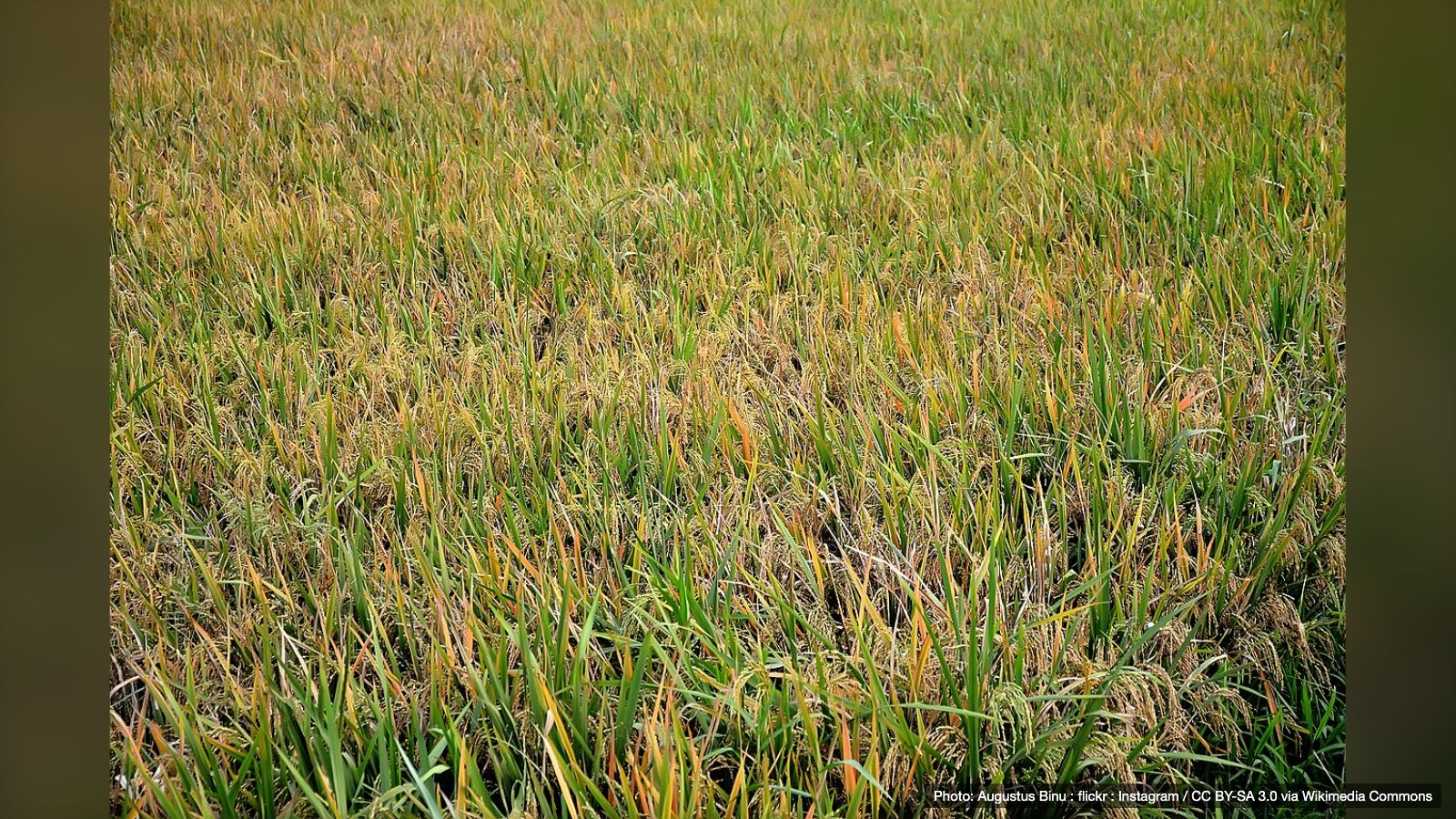
Google and Amazon are paying Indian paddy farms to drain fields and cut methane. The deals name credits, hectares and a $30 million price, but not what a farmer earns.
Original report · Explained
As of 18 October 2026, Google and Amazon have signed deals to buy about 1.7 million rice carbon credits from Indian farmers who change how they flood their paddy fields, ESG Today reported in 2026. Google agreed to buy 1 million credits from Mitti Labs over four years, and Amazon about 685,000 from The Good Rice Alliance (TGRA) for $30 million.
The deals pay for one change: keeping paddy fields wet less of the time, which cuts the methane flooded rice gives off. What none of the reports we read say is how much of that money reaches a farmer, per acre or per credit.
Big Tech is buying rice methane cuts to offset data centres
Google, Amazon and Microsoft are chasing net-zero targets while their data-centre emissions rise, The Ken reported in 2026 (The Ken, 2026). Indian startups are selling them credits earned by changing farm practice.
The target is large. India's paddy fields gave off 3.2 million tonnes of methane in 2020, 16% of the national total, The Ken reported.
That is why two of the world's largest cloud companies now have contracts tied to Indian rice.
Two deals, two sizes
Google's deal with Mitti Labs is its largest superpollutant credit deal: 1 million credits over four years, ESG Today reported (ESG Today, 2026). The project aims to reach more than 70,000 farmers and more than 100,000 hectares by 2030.
Amazon's deal with TGRA, which is linked to Bayer, covers more than 685,000 tonnes of CO2-equivalent credits for $30 million, ESG Today and The Ken reported. It involves more than 13,000 farmers on more than 35,000 hectares, according to ESG Today.
On those reported figures, $30 million for 685,000 credits works out to about $44 a credit ($30,000,000 divided by 685,000). Neither deal's price per credit was published.
The credits only exist if the farming changes, so the method matters.
What farmers actually change in the field
Most of the credits come from Alternate Wetting and Drying (AWD): draining the paddy at intervals instead of keeping it flooded all season, ESG Today reported. Amazon's deal also uses Direct Seeded Rice, sowing seed straight into the field.
Mitti Labs says AWD cuts methane by 50% and water use by 40%, according to ESG Today; no second source checks those figures. One farmer, Manu, told The Ken: "What I have been doing for the past six years saves water."
Saving water is a benefit farmers can see. Whether buyers can trust the methane cut is a separate question.
Can the credits be trusted?
Amazon's credits will be checked by a third party under Verra's Verified Carbon Standard, ESG Today reported. The reports we read did not name a verification standard for the Google deal.
The Ken reported that the validation method is untested at scale. That matters because a credit is a claim that methane was not emitted, and drained fields are hard to check across thousands of small farms.
The open question for farmers is money, and the reports leave it open.
What farmers are paid is still unclear
The Ken reported that the farmers' share of revenue is unclear. None of the reports we read gave a payment per acre, per hectare or per credit, or the split between the companies and farmers.
The states covered by the Amazon deal were not named in the reports we read either.
How the coverage split
The Ken framed the story as Big Tech's hunger for credits meeting an untested method. ESG Today led on the size of each deal as a record. Neither set out what a farmer earns.
What happens next
Mitti Labs' project with Google aims to cover more than 100,000 hectares by 2030, ESG Today reported.
Questions people are asking
Why are Google and Amazon interested in India's paddy fields?
To offset rising data-centre emissions: Google is buying 1 million credits and Amazon more than 685,000 for $30 million, ESG Today and The Ken reported.
How do farmers cut methane from paddy?
Mostly through Alternate Wetting and Drying, which drains fields at intervals; Mitti Labs claims it cuts methane by 50%.
How much is a farmer paid per acre?
Not known yet: none of the reports we read gave a figure, and The Ken calls the farmers' share unclear.
Can rice carbon credits be trusted?
Amazon's credits go through Verra's Verified Carbon Standard, but The Ken reports the validation method is untested at scale.
References
- ESG Today (2026) Amazon Signs 685,000 Ton Carbon Credit Deal to Reduce Emissions from Rice Farming in India. ESG Today. Available at: Amazon Signs 685,000 Ton Carbon Credit Deal to Reduce Emissions from Rice Farming in India (Accessed: 18 October 2026).
- ESG Today (2026) Google Signs its Largest-Ever Superpollutant Carbon Credit Deal. ESG Today. Available at: Google Signs its Largest-Ever Superpollutant Carbon Credit Deal (Accessed: 18 October 2026).
- The Ken (2026) Google and Amazon's newfound fascination with India's paddy fields. The Ken. Available at: Google and Amazon's newfound fascination with India's paddy fields (Accessed: 18 October 2026).
How we did this
We read The Ken's report on Big Tech and India's paddy fields and ESG Today's reports on the Amazon–TGRA deal and the Google–Mitti Labs deal, and set the two deals side by side. The 1.7 million total and the $44 per credit figure are our own arithmetic on the reported numbers. We looked for farmer payments per acre or credit and found none in these reports.
This story was produced, reviewed, edited and verified by the reporter before publication, with AI assistance where required.
Covered by 3 outlets across the spectrum: 33% left, 67% center, 0% right.
Who is covering this story
Sources
- Google and Amazon’s newfound fascination with India’s paddy fields — The Ken (left-leaning) ·
- Amazon Signs 685,000 Ton Carbon Credit Deal to Reduce Emissions from Rice Farming in India - ESG Today — ESG Today (center) ·
- Google Signs its Largest-Ever Superpollutant Carbon Credit Deal - ESG Today — ESG Today (center) ·